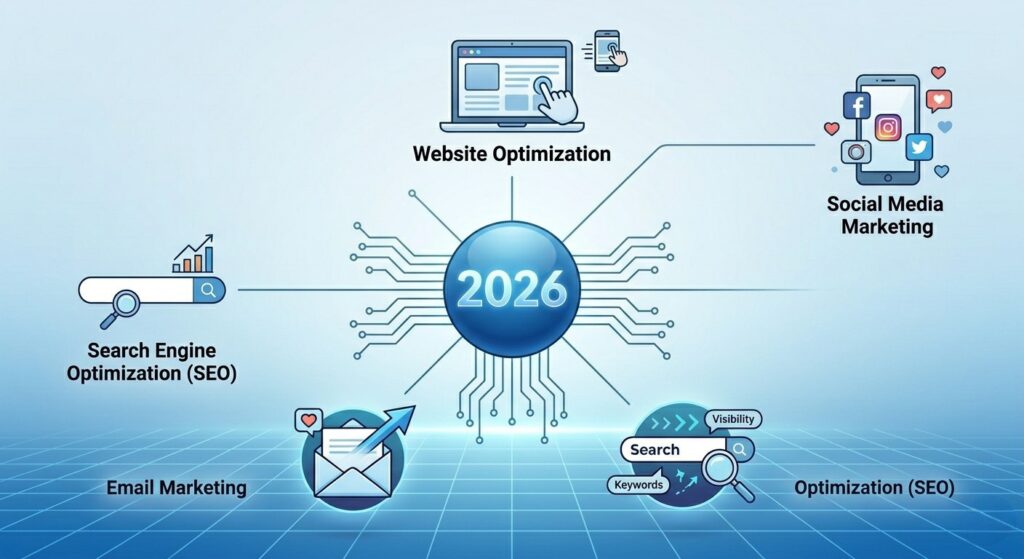

Digital Marketing for Small Businesses: A Beginner’s Guide (2026)
Introduction
In 2026, digital marketing has become an essential part of business growth. Whether you run a local shop, a startup, a service-based company, or an online store, having a strong digital presence is no longer optional. Customers now search for products, services, and businesses online before making purchasing decisions. If your business is not visible online, you may be missing valuable opportunities to attract new customers and grow your brand.
Digital marketing offers small businesses a cost-effective way to compete with larger companies. Unlike traditional advertising methods, digital marketing allows businesses to reach targeted audiences, track performance, and improve results through data-driven strategies.
This beginner’s guide explains the fundamentals of digital marketing and how small businesses can use it effectively in 2026.
What is Digital Marketing?
Digital marketing refers to the promotion of products, services, or brands through digital channels such as websites, search engines, social media platforms, email, and online advertisements.
The primary goal of digital marketing is to connect businesses with potential customers where they spend most of their time—online.
Some of the most common digital marketing channels include:
Search Engine Optimization (SEO)
Social Media Marketing (SMM)
Search Engine Marketing (SEM)
Content Marketing
Email Marketing
Video Marketing
Website Marketing
Local SEO
When these channels work together, they help businesses increase visibility, generate leads, and improve sales.
Why Digital Marketing is Important for Small Businesses
Small businesses often face challenges such as limited budgets, increasing competition, and lower brand awareness. Digital marketing helps overcome these challenges by providing affordable and measurable marketing solutions.
Increased Online Visibility
Most consumers begin their buying journey online. A strong digital presence helps your business appear in front of potential customers when they search for products or services related to your industry.
Cost-Effective Marketing
Compared to traditional advertising methods like television, newspapers, or billboards, digital marketing offers more affordable options with better targeting capabilities.
Better Customer Engagement
Digital marketing allows businesses to interact directly with customers through social media, email, websites, and messaging platforms.
Measurable Results
Businesses can track website visits, clicks, conversions, engagement, and sales through analytics tools, making it easier to improve marketing performance.
Higher Conversion Opportunities
By reaching the right audience with the right message, businesses can increase the chances of converting visitors into customers.
Build a Professional Website
A website serves as the foundation of your digital marketing strategy. It is often the first impression customers have of your business.
A professional website should:
Be mobile-friendly
Load quickly
Have a clean design
Provide clear information
Include contact details
Offer a simple user experience
In 2026, website speed, mobile responsiveness, and user experience continue to play a major role in online success.
Your website should clearly communicate:
Who you are
What services you offer
Why customers should choose you
How customers can contact you
A professional website helps build trust and credibility while supporting all other digital marketing activities.
Understanding Search Engine Optimization (SEO)
Search Engine Optimization, commonly known as SEO, is the process of improving your website’s visibility on search engines like Google.
When potential customers search for information related to your products or services, SEO helps your website appear in relevant search results.
Benefits of SEO
Increases organic traffic
Improves brand visibility
Generates quality leads
Builds trust and authority
Provides long-term results
Basic SEO Tips for Beginners
Use relevant keywords naturally
Create valuable content
Optimize page titles and headings
Improve website speed
Use mobile-friendly designs
Add internal links between pages
SEO remains one of the most valuable long-term digital marketing investments for small businesses.
Leverage Social Media Marketing
Social media platforms have become powerful tools for business growth. Platforms such as Instagram, Facebook, LinkedIn, and X allow businesses to engage with customers and promote their products or services.
Benefits of Social Media Marketing
Increases brand awareness
Builds customer relationships
Drives website traffic
Encourages engagement
Supports lead generation
Social Media Best Practices
Post consistently
Share valuable content
Respond to comments and messages
Use high-quality visuals
Maintain a professional brand image
Success on social media requires consistency, creativity, and audience engagement.
Invest in Content Marketing
Content marketing focuses on creating valuable content that educates, informs, and engages potential customers.
Popular content formats include:
Blog posts
Videos
Infographics
Guides
Case studies
Tutorials
Why Content Marketing Matters
Quality content helps:
Improve SEO performance
Build authority
Increase website traffic
Educate customers
Generate leads
Businesses that consistently publish useful content are more likely to attract and retain customers.
Use Local SEO to Attract Nearby Customers
Local SEO is especially important for small businesses that serve customers within a specific geographic area.
When users search for services near them, local SEO helps businesses appear in local search results.
Local SEO Strategies
Create a Google Business Profile
Add accurate business information
Collect customer reviews
Use location-based keywords
Maintain consistent contact details
Local SEO can significantly improve visibility among nearby customers who are actively searching for your services.
Explore Search Engine Marketing (SEM)
Search Engine Marketing involves paid advertising on search engines.
Platforms like Google Ads allow businesses to display advertisements for specific keywords.
Advantages of SEM
Immediate visibility
Highly targeted audience reach
Flexible budgeting
Fast lead generation
Unlike SEO, which takes time to produce results, SEM can generate traffic and leads almost immediately.
A balanced strategy often combines both SEO and SEM for maximum effectiveness.
Email Marketing Still Works
Despite the rise of social media, email marketing remains one of the highest-performing digital marketing channels.
Email marketing helps businesses:
Build customer relationships
Share promotions
Announce updates
Encourage repeat purchases
Effective Email Marketing Tips
Personalize messages
Provide valuable information
Avoid excessive promotions
Use clear calls to action
Maintain a consistent schedule
Building an email list allows businesses to communicate directly with customers without relying solely on social media platforms.
Digital Marketing Trends in 2026
The digital marketing landscape continues to evolve rapidly. Small businesses should stay informed about emerging trends.
Artificial Intelligence (AI)
AI-powered tools help businesses automate tasks, create content, analyze data, and improve customer experiences.
Voice Search Optimization
More consumers are using voice assistants to search for information. Businesses should create content that answers conversational questions.
Video Marketing
Short-form videos continue to dominate online engagement and provide excellent opportunities for brand exposure.
Personalization
Customers increasingly expect personalized experiences. Businesses that tailor content and offers to individual users often achieve better results.
Answer Engine Optimization (AEO)
As AI-powered search grows, businesses need to optimize content to provide direct and accurate answers to user questions.
Common Digital Marketing Mistakes to Avoid
Many beginners make mistakes that reduce marketing effectiveness.
Avoid these common issues:
Ignoring SEO
Inconsistent posting schedules
Poor website design
Lack of content strategy
Focusing only on sales
Not tracking performance metrics
Neglecting customer engagement
Successful digital marketing requires patience, consistency, and continuous improvement.
Measuring Your Success
Tracking performance is essential for understanding what works and what needs improvement.
Important metrics include:
Website traffic
Search rankings
Social media engagement
Conversion rates
Lead generation
Email open rates
Return on investment (ROI)
Regular analysis helps businesses make informed decisions and optimize future campaigns.
Conclusion
Digital marketing provides small businesses with powerful opportunities to grow, compete, and connect with customers in 2026. From building a professional website and improving SEO to leveraging social media, content marketing, email campaigns, and paid advertising, businesses have more tools than ever to achieve success online.
The key to success is developing a clear strategy, understanding your target audience, creating valuable content, and staying updated with industry trends. Small businesses that invest in digital marketing today will be better positioned to build strong brands, attract quality leads, and achieve long-term growth in an increasingly digital world.